For ten days, Lu Haitao watched rescue lights move through the water 225 metres inside a Nepali tunnel. He shouted every time. Nobody heard him. That gap, between being seen and being found, runs through everything in this issue.
We also follow three tourists caught by the tide in an Oregon cove, a contractor buried standing up in a trench two feet wide, and a bride who woke pinned in helicopter wreckage on her wedding night. All four made it out.
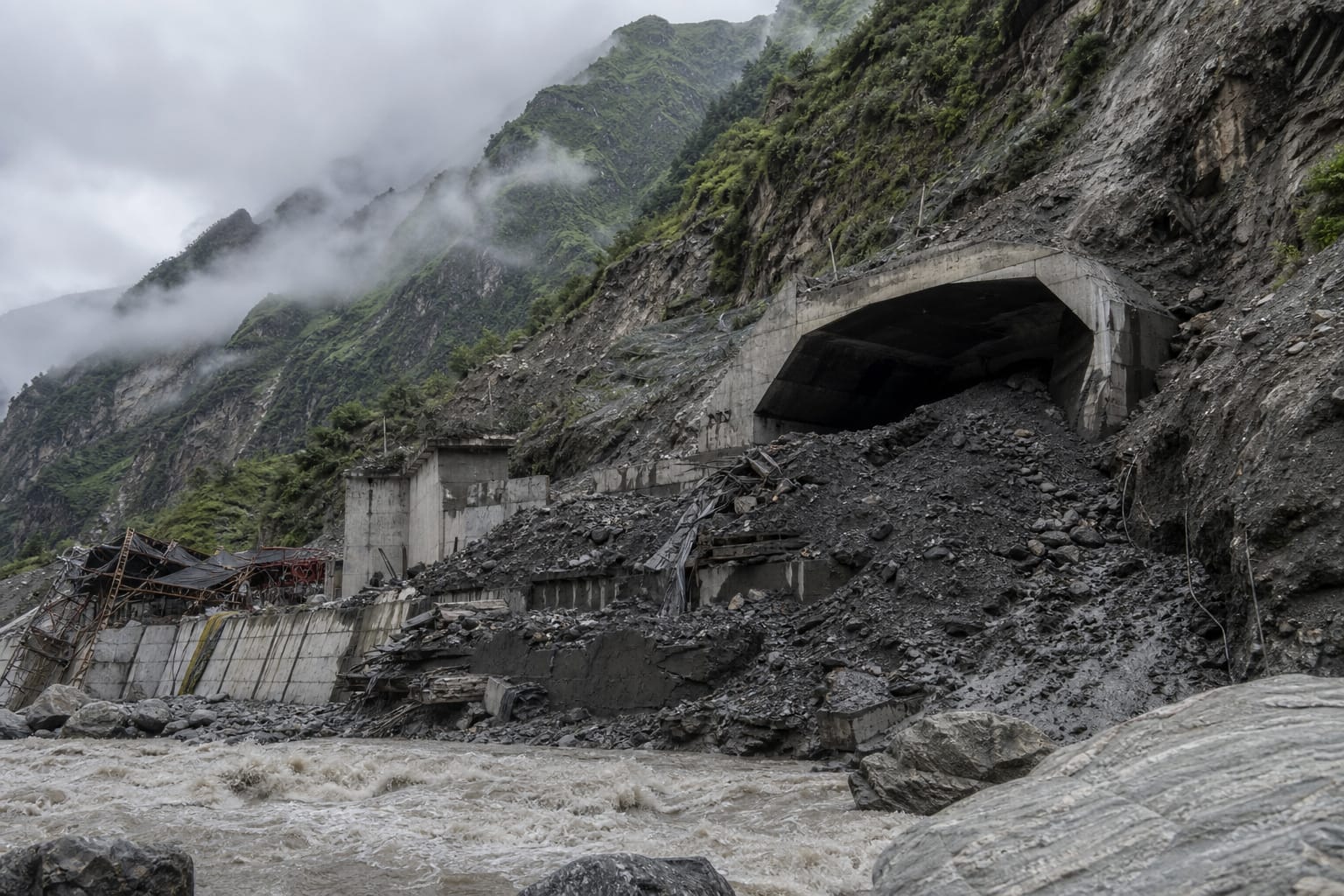
He kept shouting at the lights
Rasuwa District, Nepal · August 2026
When the flood reached the tunnel, Lu Haitao went up. He later recalled climbing to a high point inside the adit — a side passage driven into the wall of a Himalayan valley — and staying there, and that this was why he survived. After that there was nothing to see. No daylight reaches that far inside a mountain.
The water had come off a glacier. On Wednesday 26 August 2026, high on the border between Nepal and Tibet, a glacier collapsed and sent a torrent of water, rock, ice and mud down the Bhotekoshi and Trishuli river valleys. Downstream, in Rasuwa district north of Kathmandu, it inundated the 216-megawatt Upper Trishuli-1 hydropower project, a scheme being built by a South Korean company, its tunnels bored into the valley wall. More than 1,400 people were working there. One of them was Lu, 49, a farmer and carpenter from Henan province who had come to Nepal in February for what was reported to be his first job abroad. He was inside Adit 4.
Over the days that followed he saw torchlight in the distance, again and again — search parties somewhere out in the dark ahead of him. Each time, he shouted as loudly as he could. No one heard him.
He heard whistles too, blown by search parties, and assumed his mind was playing tricks on him. The rescuers' shouts never reached him at all, he told Chinese Embassy staff afterwards. What he could answer was the light. "Every time I saw the rescuers' lights in the distance, I shouted as loudly as I could," he told the Chinese state broadcaster CCTV.
Outside, the scale of the disaster was still becoming clear. By 5 September, Nepal's national disaster authority counted at least 1,331 dead and about 5,000 missing, among them 589 foreign nationals; across the border in Tibet, 31 dead and 531 missing. Roughly 900 hydropower workers were unaccounted for, about 500 of them believed to be still inside tunnels at a dozen projects. Earlier reporting on 3 and 4 September put the damage at 387.5 billion Nepalese rupees, about $2.5 billion, and a national day of mourning was set for 7 September.
Search teams came from India, China, South Korea and the United States, along with a fifteen-member Australian drone unit. At Upper Trishuli-1, the Nepali Army worked alongside the Korea Disaster Relief Team — deployed chiefly to look for nine missing South Korean workers — and alongside Chinese tunnel-rescue specialists. The Korean team began full-scale operations on Thursday 3 September. The nine Koreans were still missing.
Other workers were found alive that week. On 3 and 4 September, after more than seventy-two hours of digging, two men were brought out of the tunnel of the 60-megawatt Upper Trishuli 3A project nearby: Nepal Electricity Authority mechanical foreman Sanjay Sah, after nine days, and Kabir Maharjan on the tenth. Both were about forty metres in. Sah, who had been in the control room, told army personnel: "I was the last to leave because I had been helping others escape after the accident, and ultimately could not get out myself." He believed forty to forty-five people may have been inside.
At Upper Trishuli-1 the teams pushed deeper. On Saturday 5 September, at around 1:20 in the afternoon, searchers reached a point some 225 metres inside Adit 4 and their lights fell on Lu, still alive. It was the eleventh day of the search operation. He had been underground for ten full days.
"When they rescued me today, when they shone (the light) before my eyes, I couldn't believe it," he said afterwards, in audio broadcast by CCTV of him speaking to an officer.
A photograph released by the broadcaster shows two rescuers carrying him out of the tunnel. Nepali Army spokesperson Rajaram Basnet confirmed the rescue and the assistance of the foreign specialists, and Nepal's Prime Minister's Office announced it on social media. South Korea's SBS described Lu as emaciated but without visible major injuries; Red Star News reported that his pulse and breathing were stable after first aid on site. He was mildly hypothermic. He was taken to the Nepali Army's Maithili barracks at Trishuli in Nuwakot for a medical check and was later treated at the Military Hospital in Chhauni, Kathmandu. Al Jazeera reported that he was flown to Kathmandu by helicopter.
Hours later and further down the valley, at Betrawati in Nuwakot, a nine-member police team led by Assistant Superintendent Suman Kumar BK found 64-year-old Chandika Shrestha alive on the upper floor of a four-storey house the flood had buried. They gave her water and airlifted her to Kathmandu. "We are waiting for the rescue of more and more people," Nepal's information and communications minister, Bikram Timilsina, said that day.
China's ambassador to Nepal, Zhang Maoming, whose country had sent tunnel-rescue experts and forensic specialists to the operation, called Lu's rescue a miracle and said, in remarks reported in Chinese, that it strengthened the resolve to keep searching.
By 23 September the figures from the hydropower sites were still grim. Energy Minister Biraj Bhakta Shrestha told the House of Representatives: "According to the information we have received, more than 800 people working at various hydropower projects and structures are still unaccounted for." At Upper Trishuli-1 alone, 439 of the 1,433 people working before the flood remained missing, and 39 bodies had been recovered from the project's tunnel.
Lu had never told his family exactly where in Nepal he was working. According to Nepal News, they were notified that he was missing only six days after the flood. His sister, Lu Hairong, learned by telephone that he had been found; the family said they could not believe he was alive until the photographs appeared in the news. In mid-September, Chinese local media reported that he would be home in Henan before the Mid-Autumn Festival. "It's a stroke of sheer luck amid the misfortune," his sister told Cover News.
Sources: The Kathmandu Post, The Kathmandu Post, The Kathmandu Post, The Kathmandu Post, Al Jazeera (with AFP, AP, Reuters), Nepal News (English), Radio Nepal Online (Public Service Broadcasting), Korea JoongAng Daily, SBS News (South Korea), U.S. News & World Report (Associated Press), PBS News (Associated Press), CNN, CNN, NBC News, India TV News, Oushinet / Nouvelles d'Europe (Chinese-language), Sina News (Red Star News report), Tencent News (Dàxiàng News video report)
Read and share it on trappedalive.net →
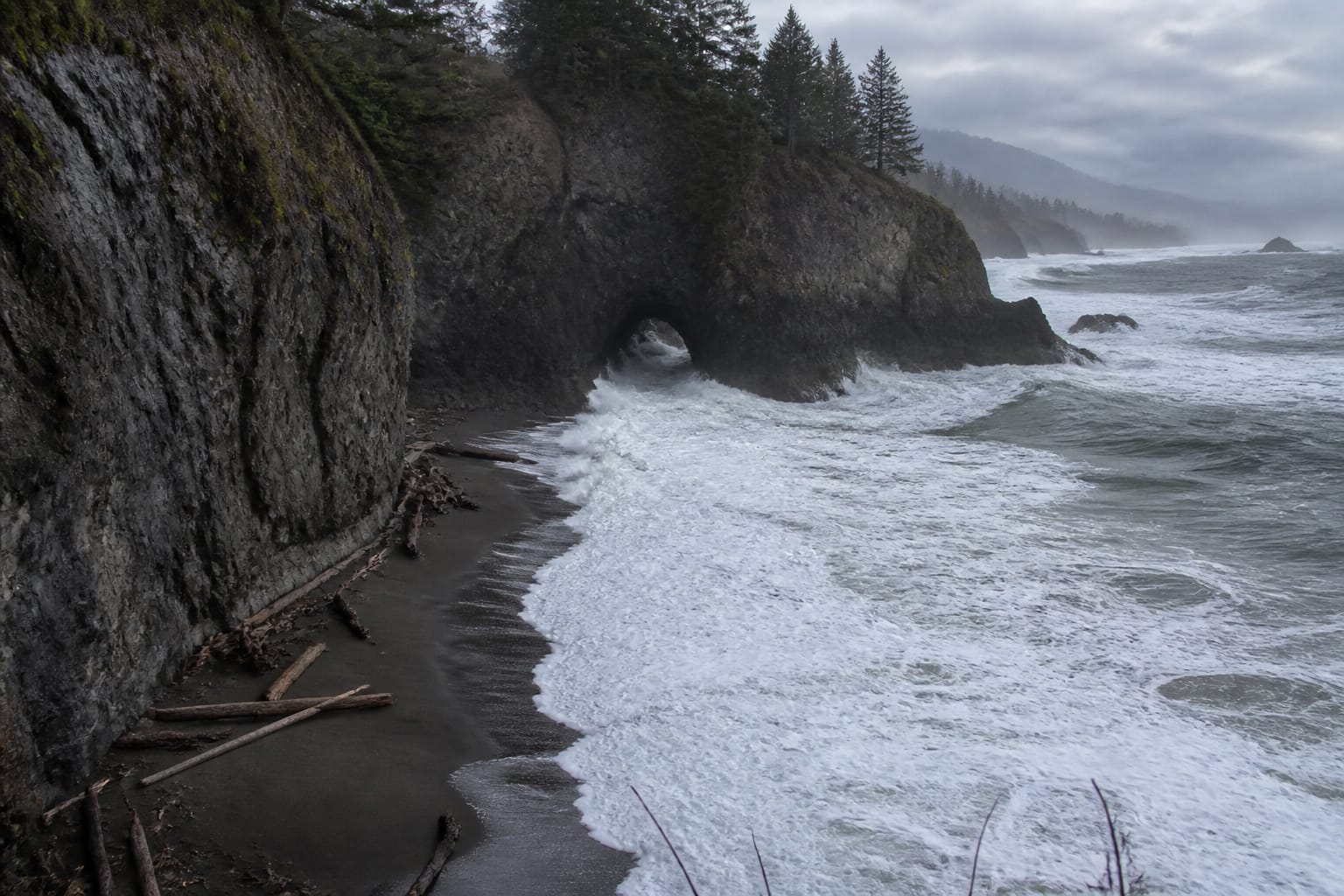
Cut off at Lost Boy Beach
Lost Boy Beach, Oregon, United States · September 2026
The sand went first. Not all at once — in increments, each wave reaching a little further up the cove, each retreat leaving less beach than the one before. Three visitors in their twenties stood on what was left of it, backs to a cliff on the north Oregon coast, watching the way they had come in disappear under white water.
There is no safe way out of Lost Boy Beach on foot. The cove sits just north of the village of Oceanside, past the north end of Tunnel Beach and the headland that holds Lost Boy Cave, and the only approach is a scramble over rocky ground and a walk through a sea cave that is open at both ends — passable only during rare extreme low tides, a couple of times a year. When the water comes back in, the cave is ocean. The cliff behind the beach offered no safe route out.
They had come down for a photograph, something dramatic, the kind of seascape this coast is known for. Now the waves that afternoon were large, the wind was gusting, the temperature was falling, and the three were wet and cold. At the base of the cliff, normal cell service was gone. One of them used an emergency satellite SOS feature to reach 911.
The alert got through. It was the afternoon of Wednesday, September 16, 2026. The message reached the Tillamook County Emergency Communications District, and from there the Netarts-Oceanside Fire District, a department run by volunteers, with U.S. Coast Guard Station Tillamook Bay assisting.
Crews launched a drone. Fire Chief Jeff McBrayer later said it found the trapped group in minutes, and the images it brought back are the ones that traveled: three small figures on a strip of sand between the cliff and the surf, and beside them, laid out on the beach, the beginnings of an enormous distress signal. They had been dragging driftwood into position to spell SOS. The earliest local account, published the following morning, describes them as having begun constructing it — the letters possibly still unfinished when the drone passed overhead.
Knowing where they were did not solve the problem of reaching them. Lost Boy Beach is said to take its name from a local legend roughly a century old, about a boy believed to have drowned after the incoming tide trapped him. The story has never been verified. The geography that produced it is real enough. Neighboring Short Beach got a community-built stairway of a hundred steps around 2000; Lost Boy never got safe access of any kind.
Crews considered waiting for the tide to recede. But the surf that afternoon was heavy, with the risk of sneaker waves — the sudden, outsized surges that arrive without warning. The three were already wet and cold, the wind was gusting, and the temperature was falling. Hypothermia was a real concern. Waiting meant leaving them where they were, cooling, with the water still coming. The crews chose to go and get them.
So the rescue went in along the edge. Rather than wading directly into unpredictable water, the team hugged what remained of the shoreline, secured to ropes, and hoisted a rescue line around a hazardous point while the waves kept coming in. The isolation that made the cove worth photographing made the rescue itself inherently risky.
Then the shoreline ran out. The team reached a rock face and stopped. "That team made their way to a rock face, and we had to wait a little while, about 40 minutes, for the wave action to recede, because we were having large waves that afternoon," McBrayer said.
The window came. "Once our team was able to safely make it around the rock face, we tethered those folks with life vests and got them back to safety," McBrayer said. The three were fitted with life vests, clipped to the safety lines, and guided through the surf to a secure area, from which they were able to walk out on their own. They had been stranded roughly five hours. Fire district photographs taken afterward show crews with them, and the rescued group in the back of a department pickup.
All three came out with only minor bumps and bruises. No one was killed, no one was missing, and no outlet reported anyone taken to a hospital. The fire district's own public post did not give their names. It called them what they were: "3 visitors became stranded on Lost Boy Beach." None of the three has been interviewed.
What officials wanted to talk about afterward was the next group. Viral posts, they said, are steering visitors toward coves like this one, and conditions there can change in minutes. Both visitors and locals, they said, need to watch the tides.
McBrayer's advice was simpler. "You have to ask a local or check a tide app on a phone for tide information," he told The Oregonian. And about Lost Boy Beach in particular: "When people are stranded there, we may not be able to get to them."
Sources: KATU (ABC 2 Portland), KATU (ABC 2 Portland) — photo gallery, Daily Dispatch (Western Fire Chiefs Association), Fox News, Oregon Coast Beach Connection, Hoodline (AI-assisted aggregation — corroboration only)
Read and share it on trappedalive.net →
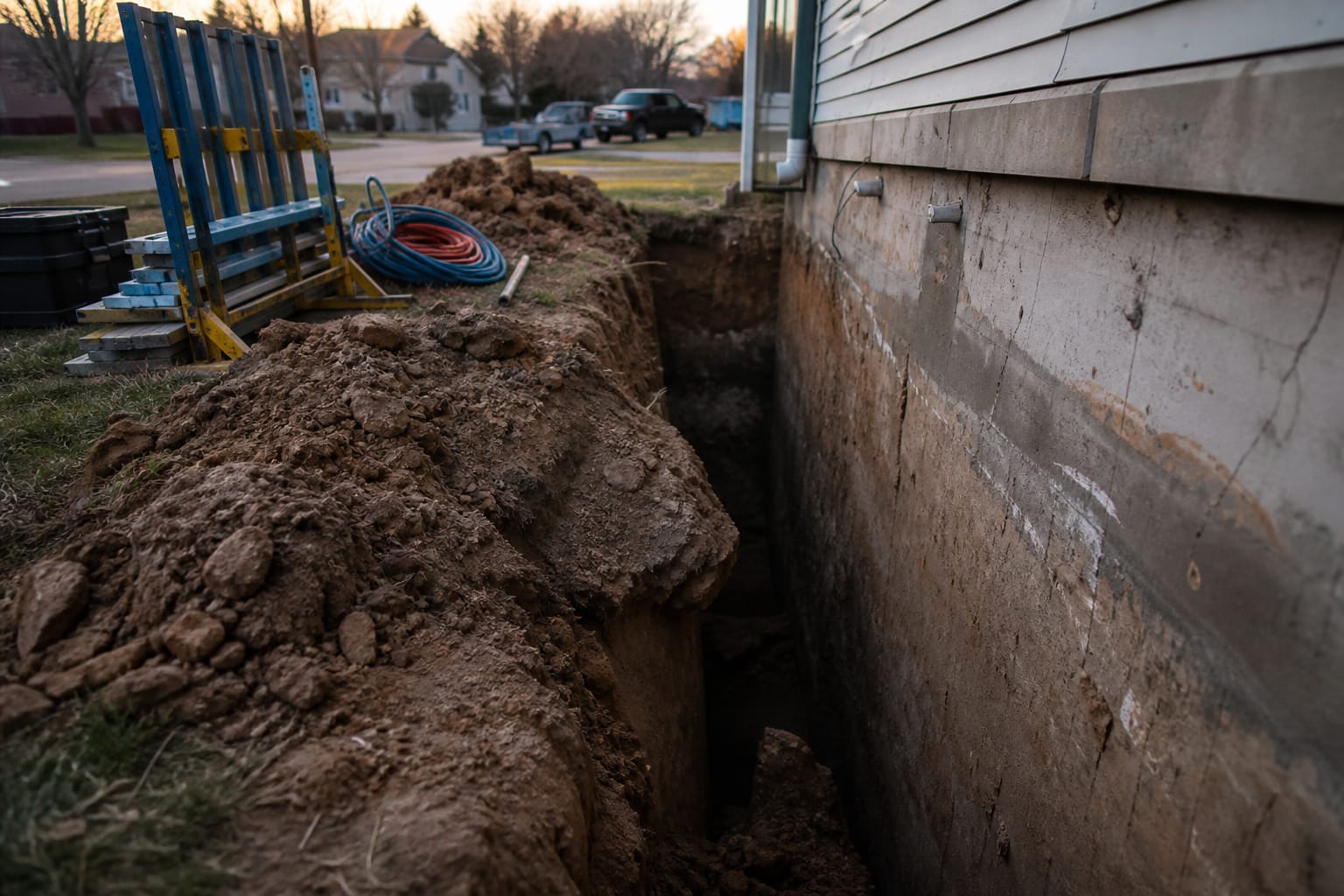
Two feet wide, eight feet down
Liberty, Missouri · September 2026
The trench cut into the ground beside the house in the 900 block of Ellis Street was about eight feet long, eight feet deep and only about two feet across — barely wider than a person's shoulders. A private contractor was working down there on the home's foundation on the afternoon of Monday, September 21, 2026, on a residential block in Liberty, Missouri, northeast of Kansas City. According to the homeowner's account, a wall gave way and trapped the worker in the trench.
The call went out at about 3:40 p.m. The Liberty Fire Department arrived first and asked the Kansas City Fire Department for mutual aid on the entrapment. Soon fire crews, KCFD rescue companies and City of Liberty utility crews were all working the scene, looking down into a gap narrower than the length of a shovel blade is long.
They could not tell where he was under the soil. "We couldn't tell where his arms and legs were," Ross Bartrom, the City of Liberty's manager of water services, said later. A single cubic yard of earth can weigh as much as 3,000 pounds, and this was ground that had already proved it would move. Anything done to reach the bottom of that trench had to be done without shifting it again.
The crews' central fear was a secondary collapse. KCFD Fire Rescue companies deployed specialized shoring equipment beside the excavation; photographs released afterward by the fire department show the gear staged on the grass along the trench line, an ordinary suburban lawn turned into a work site.
"Obviously you don't want to make a situation worse," KCFD Battalion Chief Riley Nolan said. "You don't want to create secondary collapses. You don't wanna shift the ground."
So the work went deliberately, and the pace was the point rather than a setback. "These type of situations are very long, very tedious, slow processes," Nolan said. Federal safety data make the case bleakly: most deaths in trench collapses happen in excavations less than ten feet deep, in holes that look survivable from the surface. OSHA requires protective systems in any trench deeper than five feet.
Somewhere in the fill was a man in what Nolan called a "pretty tight space." Where his arms and legs lay beneath the dirt, nobody could say — and that mattered, because every bit of soil taken out of a trench that narrow is soil that can pull more in behind it.
The turning point came from the City of Liberty Public Utilities Division. Bartrom directed his crews to bring in a hydro excavator, a truck that cuts soil with pressurized water and vacuums the slurry away up a hose. It is a tool built for exposing buried water mains without breaking them, precise enough to strip earth from around a person without anyone swinging a metal bucket in the trench.
His team had never done anything like it. "Never had done anything like that before," Bartrom said. "I was really nervous at the time."
It worked. "Able to get in, remove a lot of that dirt," Nolan said. "Really sped up the process." Of the utility crews, he said simply: "They assisted in a large way."
Daylight went out of the block while they worked. Roughly four hours after the 3:40 p.m. call, in the early evening, crews had cleared enough soil to bring the man up out of the trench alive.
Medics treated him at the scene and moved him to an awaiting ambulance for transport to a local hospital. In the hours immediately afterward, neither KCFD nor Liberty officials could say what injuries he had. KCTV5 reported the next day that workers at the Liberty home said he was doing okay and that he was recovering in the hospital; officials themselves released no further update on his condition. He has not been named.
Liberty Fire Chief Chris Young said OSHA had been contacted and would investigate, and that with the inquiry under way officials would not discuss the company involved, the work being performed or the specific circumstances of the collapse. No one has been accused of any wrongdoing. Young also stressed how much the department relies on mutual aid for complex incidents, and in its own statement KCFD called the operation "a great, coordinated effort involving multiple agencies and resources, including the City of Liberty Public Utilities, whose assistance was critical to the success of the operation."
Bartrom, who had started the afternoon nervous and had never run an operation like it, remembered the moment the man came out of the ground. "I just remember cheering," he said. "I just cheered as soon as it happened. I was just so happy to see him out safely."
Sources: Daily Dispatch (reprint of WDAF-TV FOX 4 Kansas City), KCTV5 (Kansas City), KSHB 41 Kansas City, Little Apple Post, WDAF-TV FOX 4 Kansas City, Liberty Courier-Tribune, Hoodline (AI-assisted aggregator — used only for background, duration figure unreliable)
Read and share it on trappedalive.net →
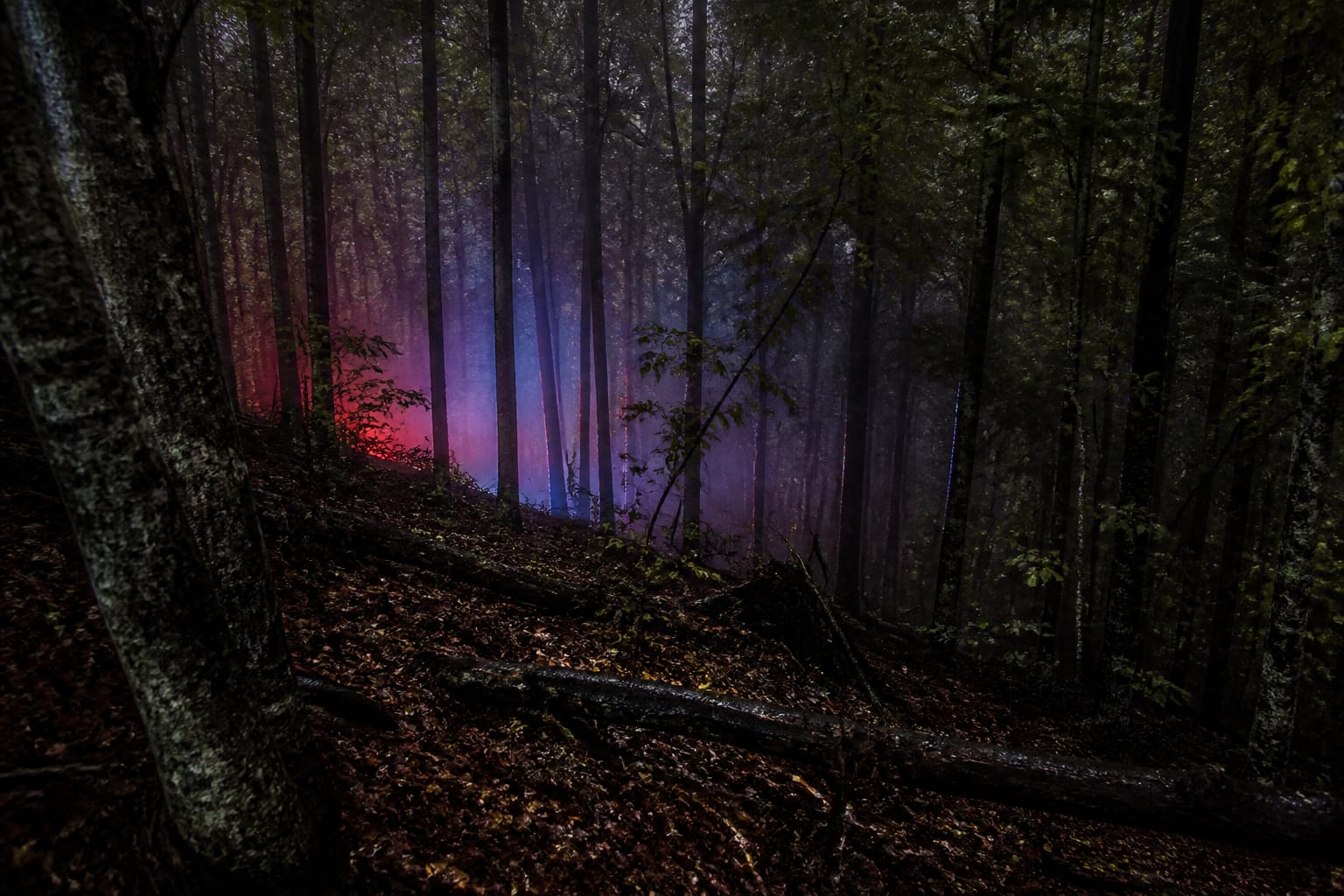
No fire to find them
Dawson County, Georgia · May 2026
She woke in the dark, under the wreckage. A Robinson R66 had come down through tall trees into a steep, wooded fold of southwest Dawson County, Georgia, and what was left of it lay over her among fallen limbs. Her husband's body rested on her chest. "She said when she woke up she saw my son Dave resting on her bosom," her father-in-law, George Fiji, later told Atlanta News First. "She saw blood on him, and by then his body was completely cold. She's a nurse, so she knew he was gone."
Hours earlier, on Friday, 29 May 2026, she had been married at The Revere, an events property in the hills near Dawsonville. Roughly 400 guests came. The send-off was a helicopter, waiting on a helipad on the grounds, described in a lawsuit filed months later as part of a promotion. The newlyweds were to fly south to DeKalb-Peachtree Airport and spend the night at an Atlanta-area hotel. Radar showed rain and storms over Dawson County that evening; a witness in the area reported fog. The Federal Aviation Administration put the crash at about 10:30 p.m. The lawsuit says it happened roughly five minutes after takeoff.
Two of the three people aboard died at the scene: the groom, Dave Fiji, 25, a first officer for Endeavor Air, and the pilot, identified by the Dawson County coroner as Nikhil Nargundkar. The bride, Jesni, survived the impact. She was pinned and could not free herself. Help was coming toward the mountain, but no one yet knew where to look.
Almost everything known about the hours that followed comes secondhand. Jesni — identified in court filings as Jesni Sam — has not spoken publicly in the coverage of the crash. What is on the record comes from George Fiji, who talked to Atlanta reporters in the days afterward, and from her attorneys four months later. "She said when she woke up, she was under the rubble," he told WSB-TV.
At some point in the dark, according to Dawson County records obtained by The Atlanta Journal-Constitution, deputies moving through the woods heard a woman calling for help. It is the only reported detail of what she did, over those hours, to be found.
The same records put a 911 call about a possible helicopter crash at around 10:10 p.m., some twenty minutes before the FAA's time; the discrepancy has not been resolved in the public accounts. Dawson County Sheriff's Office deputies responded with Dawson County Fire and EMS. Their first problem was finding the aircraft. The National Transportation Safety Board would later say the helicopter struck tall trees before hitting the ground, and that there was no post-impact fire. Nothing burned to mark where it had gone in — only dark, steep terrain and trees.
"It took them awhile to locate the helicopter itself," George Fiji said.
A drone picked up possible heat signatures in the area and gave searchers something to walk toward. Finding it was only the first obstacle. A man who lives near the site told WTOC that first responders borrowed his side-by-side ATV to push in as far as the ground allowed, then went the rest of the way with saws. "It's so rugged back there; it's really almost impossible to walk," he said. "So they chain-sawed their way back in there."
Crews cut her free shortly before 3 a.m. Saturday, according to the county records. How long she had been pinned depends on the account: her family first said five hours, the neighbour and later reporting said six, her lawyers say nearly six. Measured against the FAA's crash time, it works out closer to four and a half. Either way, it was most of the night. She was taken to a metro Atlanta hospital. Authorities were still working the site on Saturday morning.
In early June, George Fiji described her injuries as cuts and bruises with no broken bones. He told Fox News about speaking with her afterward: "She was crying on the phone: What happened? What happened?"
Dave Fiji had wanted to fly since he was 10, his father said, and Endeavor Air confirmed his death in an internal statement. Of the hours before the flight, George Fiji told WSB-TV: "We could say it was the perfect wedding."
Andy Whitaker, director of operations for Prestige Helicopters, which operated the R66, said the pilot had flown the route many times and that the company had gone 40 years without an accident before that night. WTOC reported that the company's website states it requires six miles of visibility and a cloud layer above 600 feet, and that it does not fly in electrical storms or heavy wind gusts. George Fiji said the pilot decided to fly at a higher altitude before launching.
On Tuesday, 22 September 2026, Jesni filed suit individually and on behalf of her husband's estate, naming Prestige Helicopters Inc., The Revere LLC and Revere Group LLC. The complaint alleges the pilot failed to properly assess the weather and to cancel or abort the flight, and that the helipad departure was arranged without adequate safety or weather-cancellation procedures. Those are allegations; no response from the defendants appears in the coverage reviewed. Her attorneys say she was severely injured, with permanent scarring and continuing psychological effects — a heavier account than her father-in-law gave in the first days, and one made four months later, in a court filing.
The NTSB investigation remains open, with the FAA assisting. Investigators have asked witnesses to come forward with any surveillance footage or video. No cause has been determined, and no final report has been issued.
In the first week of June, with his son's funeral ahead of him and his daughter-in-law still in the hospital, George Fiji was asked how she was doing. "She's devastated," he told Atlanta News First, "but she's recovering."
Sources: WSB-TV Channel 2 Atlanta, WSB-TV Channel 2 Atlanta, Atlanta News First, Atlanta News First, FOX 5 Atlanta, FOX 5 Atlanta, Fox News, WTOC, Now Georgia, FetchYourNews (Dawson), Dawson County News, NRI Pulse, Hoodline, The Atlanta Journal-Constitution, New York Post
Every story is retold from published reporting, linked above. Know a survival story we should tell? Send it to us.